
The New Jersey Domestic Workers’ Bill of Rights: An Implementation Analysis from the Perspective of Immigrant Workers
Maria Chacon-Rendon, Alaina Dixon, Juan Flores-Serrano, Jamia Hill, Sharon Bali, and Jasmine Hoff
Faculty Advisor: Dr. Andrea Hetling
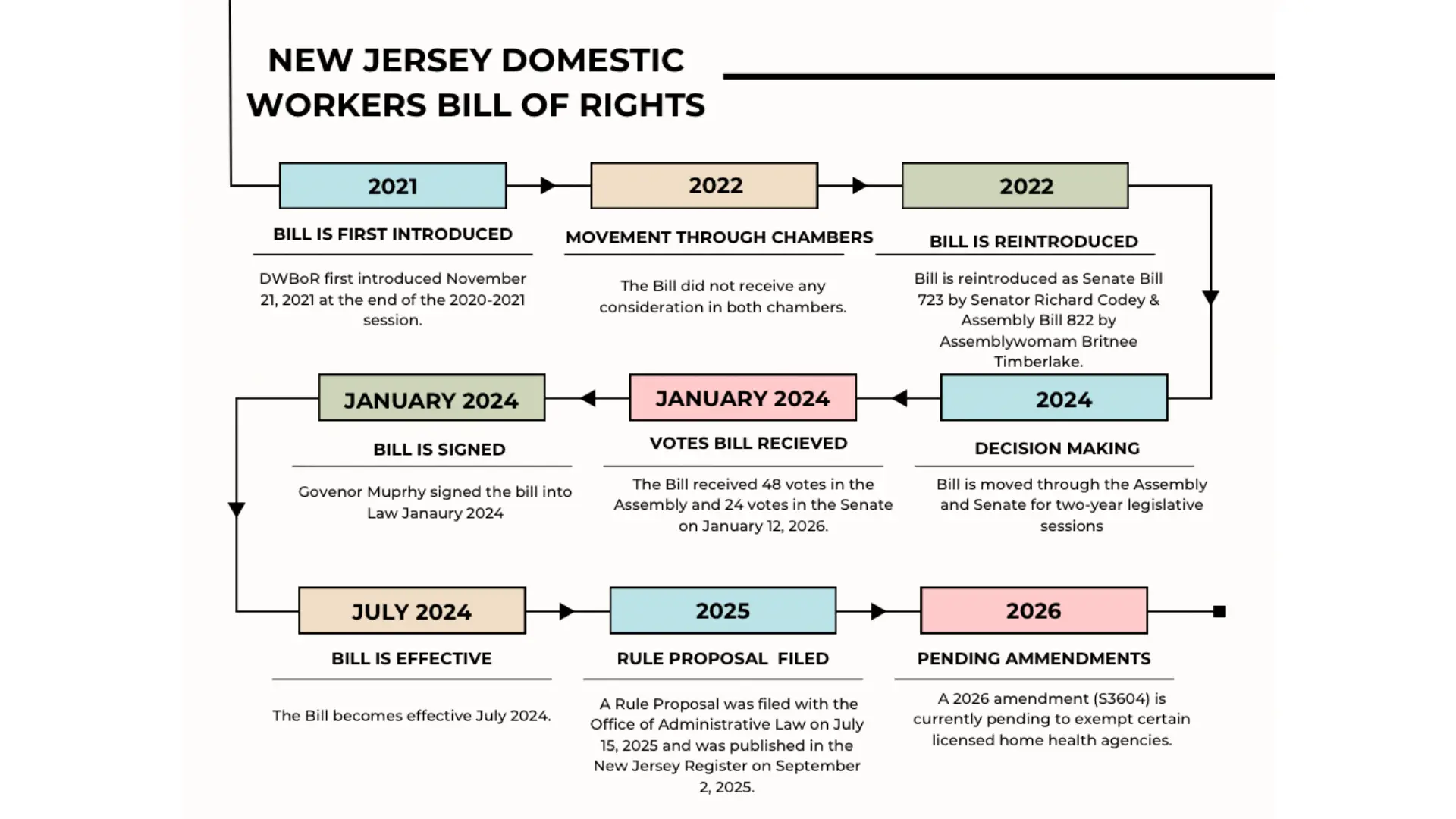
In January 2024, New Jersey became the 11th state to enact a Domestic Workers Bill of Rights (DWBoR). The legislation established the right to minimum wage, rest breaks, overtime pay, and formal contract agreements, all to be upheld regardless of worker immigration status. This report, written by a team of Master of Public Policy students at the Edward J. Bloustein School of Planning and Public Policy, presents findings from a semester-long capstone project designed to fulfill a graduation requirement. At the request of Lazos América Unida, the student research team explored the implementation of the DWBoR. The team conducted a document review of New Jersey materials and the experiences of three comparative states. The document review was complemented by insights from key stakeholders and domestic workers to assess how the protections enshrined in the law have been implemented in practice.
The research team employed a qualitative method to collect and analyze perspectives from six key stakeholders over the course of five interviews and 10 domestic workers and advocates who participated in an in-person focus group. Through this analysis, the research team uncovered three main themes that impact the implementation of the law and offer several recommendations that may help improve future implementation efforts.
Though key stakeholders and domestic workers were supportive of the law for the legal framework it provides, there are still gaps in the implementation of the DWBOR. A thematic analysis yielded findings related to three themes: 1) current political climate, 2) outreach, compliance, and enforcement challenges; and 3) the economic mobility of domestic workers are key issues that compromise the effectiveness and impact of the law.
Based on these findings, the research team recommends various targeted strategies to improve implementation. Policy recommendations align with the themes of our analysis and include:
- promote outreach about the law to more employers and domestic workers;
- focus on clear and accessible guidelines of certain provisions;
- increase educational outreach capacities; and
- support mediatory staff with available funding.
Lastly, the report also discusses areas for future research, which are intended to offer suggestions for projects that will lead to a greater understanding of the needs of domestic workers today.