
Graduate Programs
Shaping Policy. Transforming Communities.
Advancing Health Systems. Harnessing Data for the Public Good.
At the Bloustein School we offer master’s and doctoral programs designed to turn your ambitions into impact.
Ranked among the nation’s leading policy schools, the Bloustein School prepares graduates for meaningful careers across the public, private, and nonprofit sectors — from government agencies and planning departments to health care organizations, research institutions, and advocacy groups. Our faculty bring real-world expertise alongside rigorous scholarship, and our location in the heart of the Northeast corridor puts you close to the cities, agencies, and policy environments where change happens.
Explore the programs below to find the path that’s right for you. From our Master of Public Policy and Master of Urban Planning and Policy Development to our Health Administration and Public Informatics programs, plus doctoral degrees and a wide range of graduate certificates, there’s a program built for where you want to go. Scroll down to learn more about each degree, see the kinds of work our students take on, and take the first step toward applying.
Prospective Students
Recent Graduate Student Profiles


Graduate Degree Programs

Public Policy
The Bloustein School’s Graduate Program in Public Policy is designed to fill the need for highly trained individuals to work on complex public policy problems. Students develop and refine their competence in analytic and quantitative skills, forming a thorough understanding of the political institutions and processes through which public policies are formulated and implemented.
Urban Planning and Policy Development
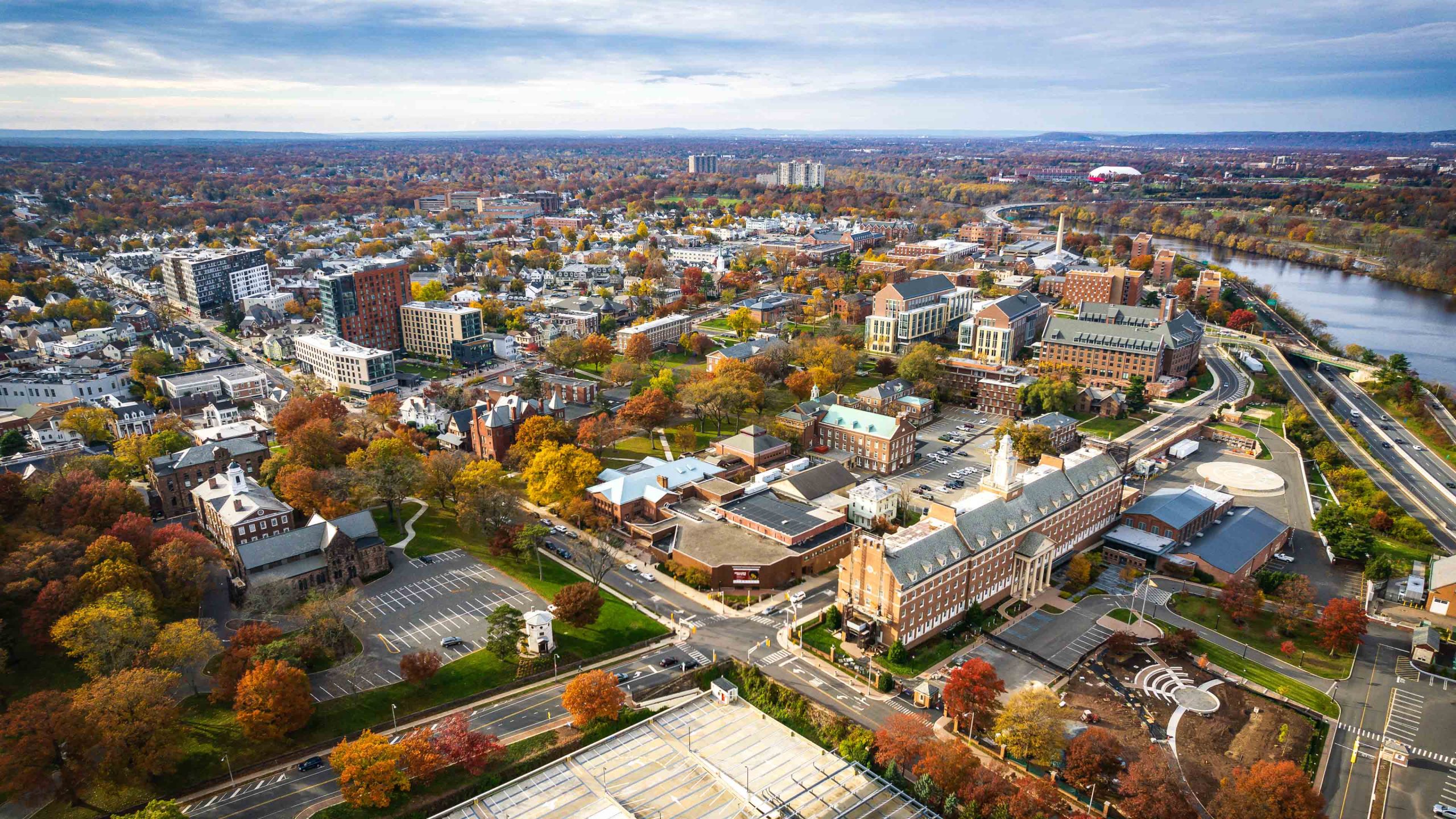
The Bloustein School’s Graduate Program in Urban Planning and Policy Development is future-oriented and comprehensive. It seeks to link knowledge and action in ways that improve the quality of public and private development decisions affecting people and places. Because of its future orientation, planning embraces visionary and utopian thinking, yet also recognizes that the implementation of plans requires the reconciliation of present realities to future states. To become effective and ethical practitioners, students in the program must develop a comprehensive understanding of cities and regions, and of the theory and practice of planning. They must also be able to use a variety of analytic methods in their practice. They must become sensitive to the upstream factors influencing healthy communities, and the ways in which planning affects individual and community values, and must be aware of their own roles in this process.
Health Administration
The Master of Health Administration program is tailored for students who have completed a bachelor’s degree and who work or plan to work in the health care industry. The MHA is also suitable for those seeking to make a career change or the health practice professional moving into a management position. The program provides students with an interdisciplinary education focused on improving population health, health care, health systems, and policy. While students receive rigorous training in economics, ethics, law, leadership and disciplines similar to those in an MBA curriculum, the Rutgers MHA is specifically tailored to the health care sector.

Public Informatics
The Master of Public Informatics provides the vehicle for educating professional student cohorts in the competencies needed in urban and public informatics: statistics, programming, data management, data analytics, visualization, spatial analysis, applications and the integration of these skills. Graduates of the program will bring a critical voice and a deep understanding of context to an emerging field serving the range of planning, public policy, informatics and urban health fields.

Doctorate (PhD) in Planning and Public Policy
The Doctor of Philosophy (PhD) degree in Planning and Public Policy, offered through the Graduate School-New Brunswick, is an advanced scholarly degree appropriate for students seeking a career in university teaching and research, or a leadership position in planning and public policy in the public, private or non-profit sector.

Doctorate (DHA) in Health Administration
The Doctor of Health Administration (DHA) program is designed to facilitate mid-level and senior health care professionals’ clinical and/or administrative experiences into opportunities to teach, shape public policy, and lead complex organizations. Successful applicants must possess relevant master’s or post-baccalaureate professional degrees and significant practical experience in the field.
Certificate Programs
Certificates are groupings of five or so courses offered by key, multiple departments that if taken, indicate that the student has developed cross-disciplinary expertise in a particular subject area. The Bloustein School offers 10 graduate certificate programs in transportation, climate change, energy, public policy, real estate, historic preservation, and more.

Transportation Studies
Geospatial Information Science

Historic Preservation

Human Dimensions of Environmental Change

Real Estate Development and Redevelopment

Climate Change Risk and Resilience

Clean Energy

Urban Planning
Public Policy

Public and Urban Informatics
Student Projects
Under the direction of faculty and research staff, students at the Bloustein School analyze real-world issues for real clients and develop real solutions. From planning studios to policy practicums to applied field experiences, students use a range of analytic, design, or research techniques to gain practical experience. They consider socioeconomic, demographic, environmental, political, and other conditions as well as stakeholder engagement as they research and assess projects, and are encouraged to use “best practices” in order to develop solutions that are equitable and efficient.

Montclair Center BID Economic Needs Assessment
Partnering with the Montclair Center Business Improvement District (BID), this graduate studio conducted a district-wide economic needs assessment that builds on the 2021 Strategic Plan to evaluate current post-pandemic conditions. The report examines the results of the survey, analyzes the current progress of the goals outlined in the previous 2021 Strategic Plan, and provides placemaking and economic development recommendations for the Montclair Center BID.
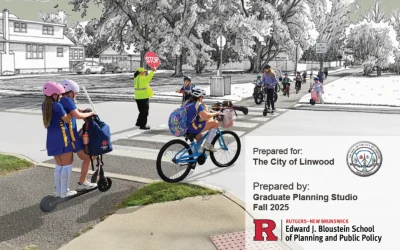
Complete Streets Planning: Enhancing Active Transportation in Linwood, NJ
Partnering with the City of Linwood New Jersey, the studio developed recommendations to improve a well-used bicycle and pedestrian trail. Central to the plan are recommendations for widening the Linwood Bike Path to fifteen feet, supported by recommendations focused on placemaking, climate resilience, and enhancing the overall user experience.

Exploring Policy Pathways for a Public Health Insurance Option: FamilyCare Buy-In Program
This report examines three policy options New Jersey could consider to expand coverage for individuals who are left out of federal programs due to their immigration status or because they cannot afford coverage. The options are a Basic Health Program (BHP), a Medicaid Buy-In, and a state-run Public Option.

Understanding Attrition in New Jersey’s Teacher Preparation Pipeline
The teacher pipeline in New Jersey reflects both national trends and state-specific structural conditions. Enrollment in EPPs has declined, and completion rates have dropped over time, mirroring broader national patterns of teacher attrition and shortages. At the same time, alternative certification pathways (CE and Limited CE) have reshaped entry into the profession. Policy changes in New Jersey have also influenced the dynamics of the teacher pipeline.

Building Pathways into Behavioral Health Careers for Men of Color
NYC Men Heal is a workforce development pilot program, to be implemented by the Young Men’s Initiative (YMI) in the Fall of 2026. The program is designed to support men of color (MoC) in building rewarding careers in behavioral health professions, including social work and mental health counseling.
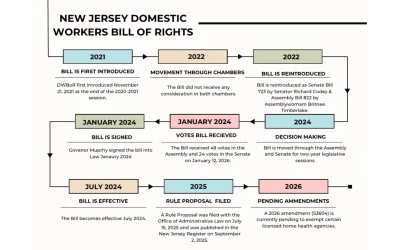
The New Jersey Domestic Workers’ Bill of Rights: An Implementation Analysis from the Perspective of Immigrant Workers
At the request of Lazos América Unida, the student research team explored the implementation of the DWBoR. The team conducted a document review of New Jersey materials and the experiences of three comparative states. The document review was complemented by insights from key stakeholders and domestic workers to assess how the protections enshrined in the law have been implemented in practice.
%
Employment Rate
Graduates obtaining full-time employment within 1 year of graduation (Class of 2025)
%
Prepared for their Jobs
85% of our graduates responded that their educational experience prepared them for their current job.
%
Student Graduation Rate
Percentage of students graduating within 4 years
(Entering Class of 2021)