
News
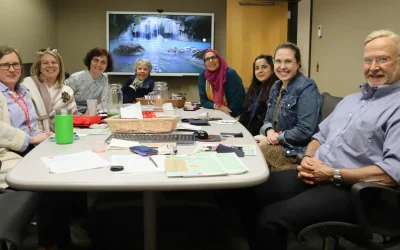
Bloustein Awarded Second ScarletWell Connection Grant
“Wellness is critical and something that each one of us should be thinking about every day, including in our workplace,” Deoli said. “Sometimes, it is a little push from a colleague and friend, a challenge with lovely goodies and prizes or a reminder of small things we can do in our offices, even on busy days.”

Dr. Ignaccolo New Book: Small-Town Renaissance
Whether you’re a policymaker, urban planner, designer, tech innovator, or heritage advocate, this book offers fresh insights, actionable strategies, and a compelling vision for the future of rural development in the digital age.

City to Plug Budget Hole With $33M in Land Sales, Solomon is a no Vote
“It doesn’t make it a great practice, but it’s often necessary to meet competing demands,” said Pfeiffer, one being “sometimes” an interest from officials in keeping taxes low.

Wolff studies the DASS-21 with Incarcerated Men
Factor loadings indicated a dominant general distress component, with some specificity for individual subscales. These findings support the DASS-21 as a valid and robust measure of psychological distress in prison populations, highlighting its utility for mental health screening in correctional settings.

Heldrich Report: Defining the Care Economy in New Jersey
A new report for the New Jersey Statewide Data System, written by Ann Obadan, Ph.D., Research Project Manager at the Heldrich Center for Workforce Development, and Amarachi Chuka-Maduji, former Research Project Assistant at the Heldrich Center and currently at the Delaware Department of Labor, provides an overview of how states and scholars conceptualize the care economy.

Dean Shapiro: Simplifying Research Regulations & Policies
Dean Stuart Shapiro served on a committee for a report titled “Simplifying Research Regulations and Policies” for the National Academies of Sciences, Engineering, and Medicine.
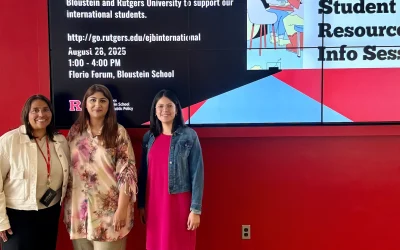
International Alumni Welcome New Graduate Students
Current international graduate students and recent international alumni at the Bloustein School warmly welcomed the newest cohort of international students, sharing their experiences and offering valuable advice about navigating life and academics in a new country.

Demystifying science: The more lanes we add, the more cars there are
If motorists had to pay fees to offset the costs of air pollution and climate change caused by motor vehicles, they would not take their cars to take advantage of less congestion, Mr. Noland. Additionally, “if there is space for a railway along the highway, for example, it is cheaper to transport people by public transit than to widen a highway”, he says.

Which North Jersey town is most expensive? Highest average property tax in Bergen, Passaic
But shared services often yield savings only on a case-by-case basis at the local level rather than statewide, said Rutgers’ Pfeiffer, while Ciattarelli’s proposal for an alternating property tax rate could run afoul of the state constitution.
“You can’t give some people a lower rate than other people,” Pfeiffer said. “You have to assess everybody at the same standard.”
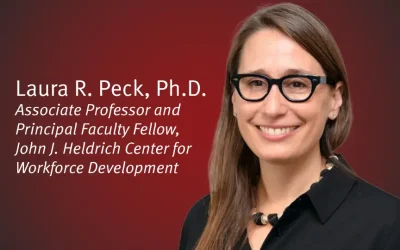
Bloustein, Heldrich Center Welcome Laura R. Peck, Ph.D.
Rutgers University-New Brunswick’s Edward J. Bloustein School of Planning and Public Policy is pleased to announce the appointment of Laura R. Peck, Ph.D., as Associate Professor, effective September 1, 2025.
Dr. Peck will also serve as a Principal Faculty Fellow at the John J. Heldrich Center for Workforce Development, housed within the Bloustein School.
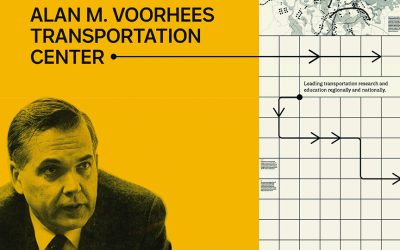
Celebrating 25 Years of Alan Voorhees’ Impact on Global Transportation Planning Issues
The Alan M. Voorhees Transportation Center (VTC) was seeking a way to highlight Alan Voorhees’ impact on national and global transportation planning issues. The Alan M. Voorhees Legacy Project provided the path forward.
Since 1988, VTC has been a leader in informing public discussion of transportation policy issues. Committed to conducting research and finding innovative approaches to transportation problems, VTC’s research identifies and explores transportation linkages to public policy areas such as economic development, land use, political governance, finance, and social policy.

Data-Driven Future: The Evolution of Informatics
Informatics applications have long been a part of the Bloustein School’s major areas of study—transportation, environmental management, urban design, mobility, social policy, public management and operations, public health, health administration, and community engagement and empowerment.
The school went on to launch the Master of Public Informatics (MPI) in 2019 to provide a vehicle for students seeking higher-level competencies in the field of big data.