
News

UBS latest bank to announce NJ job cuts as finance sector shrinks
James Hughes, an economist at Rutgers University, told NorthJersey.com that white-collar jobs in banking and finance have become saturated after a two-year hiring spree that followed the COVID-19 pandemic.

Joel Cantor Op-Ed: Why Our Healthcare Costs are so High
So, what is the big health care spending driver? The late Princeton University professor and renowned health policy scholar Uwe Reinhardt put it succinctly: “It’s the prices, stupid.”
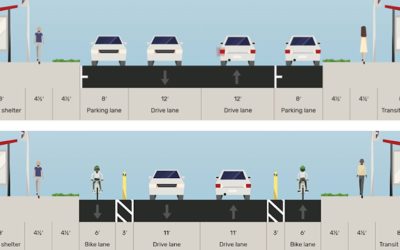
Bicycle Lanes Have a Calming Effect on Traffic – Study
Computer vision techniques were used to detect and classify the speed and trajectory of over 9,000 motor-vehicles at an intersection that was part of a pilot demonstration in which a bicycle lane was temporarily implemented.
Analyzing Short-Term Involuntary Commitment Policy in New Jersey
Larissa Garcia, Maia Hill, Stephen Keffer, Awn Rizvi, Raisa Rubin-Stankiewicz, Vee Yeo Read Report At the request of New Jersey Policy Perspective (NJPP), Rutgers graduate student researchers from the School produced a report to analyze P.L. 2023, c.139 which doubles...

New Jersey’s Career and Technical Education System: A Comparative Analysis Across States
Bauyrzhan Amanov, Belen Conde, Yanzhen Guan, Jessica Parineet, Cecilia Salazar Read Report New Jersey’s Career and Technical Education (CTE) system delivers valuable career-focused education and work-based learning to over 45,000 full-time secondary students. CTE...
MHA program earns CAHME Reaccreditation
The school participated in a 2-year evaluation process to show that the MHA is of the highest quality and meets certain standards.
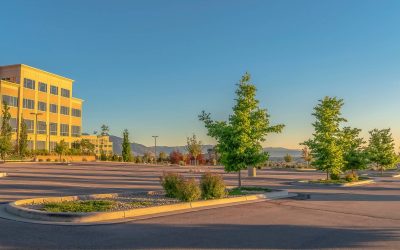
COVID was final blow to some NJ suburban office parks. Here’s what they’re morphing into
“Our suburban office inventory is overbuilt and under-demolished,” said economist James Hughes

New Jersey aiming for record $7.2 billion pension fund contribution. It’s still not enough.
As long as the state keeps paying 100% of the ARC annually, “they are moving in the right direction,” said Keevey, a former state budget director and state comptroller.

American Dream saw boost in sales in first quarter of 2024. Here’s how much
The lawsuits and failure to pay debts “has the effect of buying them time, which gives them the opportunity to renegotiate things” more in the mall owners’ favor.” said Marc Pfeiffer.

Courtney Culler Wins Excellence in Student Support Award
Courtney Culler, Associate Director for Graduate Student Services for the Bloustein School, was the 2024 recipient of the Excellence in Student Support Award.

School closures could mean longer commutes for students. Here’s why that’s a problem.
“The research suggests that more local schools are good for students’ health, and probably for their well-being,” said Michael Smart,

N.J.’s senior U.S. senator is on trial for corruption. Again. Will this time be different?
“None of that would have happened without Menendez,” said Julia Sass Rubin, “So I think the indictment was absolutely critical to where we are right now.”