
News

Intelligent Informatics @ Bloustein: Artificial Intelligence – Use, Abuse & An Exciting Future
Collaborators: AI Social Impact Lab & Garfield City Council An Interactive Presentation By Bloustein AI Course Participants Faculty Advisor: Professor Jim Samuel, Rutgers Bloustein School

Maplewood Dems Questioned ‘County Line’ Years Ago; Now It’s Big News
Ultimately, says Rubin, because party chairs and/or party insiders have the power to determine who goes on the county line, “Elected officials become beholden to a few party insiders, not to the voters.”
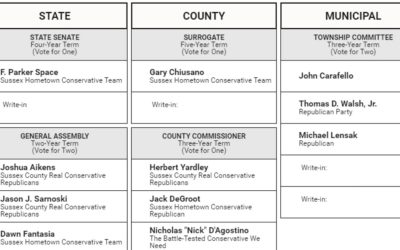
Op-Ed: Three reasons why NJ should cut the ‘county line’ from ballots
For example, Professor Julia Sass Rubin from Rutgers University has argued that the county line system impacts elections by “steering voters towards specific candidates” and “increases voter confusion, contributing to overvotes and undervotes” by as much as 50 percentage points in some races.

Preethy Thangaraj (MPP ’20) New Incoming Deputy Director of the Office of Climate Action and the Green Economy
“I look forward to continuing the responsibility of cementing New Jersey’s climate leadership by delivering on urgent and high-impact climate policies, just environmental planning, and a robust green economy. I thank the Governor for this expanded opportunity.”

Too late to change ballots NJ’s political bosses use to sway elections? Judge pushes back.
The defense cross-examined Sass Rubin, asking her whether she could specify whether the races she analyzed could have been affected by name recognition of the candidate, or the amount of money spent on the race.
“Potentially,” Sass Rubin said. “But you’re seeing the same pattern being on the county line and having the same results across 45 races.”

Dean Shapiro: A hidden way politics shapes regulation
To address these questions, two forces should be brought to bear. The first is expertise, which is housed at the agencies of the executive branch. The second is political responsiveness, which comes from the president. The push and pull between expertise and responsiveness is hard to balance, but few would argue that neither should be present.

Primary ballot in N.J. is ‘unconstitutional,’ state attorney general says
“We are the last of the [political] machine states, and the machine relies on the county line to stay in control,” Rubin told The Washington Post on Monday. “If you displease the people who decide who gets the line,” you could lose your office, she said.

VTC’s Leigh Ann Von Hagen Named Sustainability Hero
Sustainable Jersey named Leigh Ann Von Hagen a 2024 Sustainability Hero. Leigh Ann is a managing director and adjunct professor with the Alan M. Voorhees Transportation Center and a founder of the Planning Healthy Communities Initiative.

Controversial bill to revamp NJ public records law yanked
I would suggest there’s no pressing reason to rush anything through in a few months,” Pfeiffer told NJ Spotlight News. “The attention that’s been placed on this has given the Legislature and the governor the opportunity to really rethink how we manage public records in the state of New Jersey…”

Op-Ed–We need to fix OPRA – Let’s start here
It is widely acknowledged that OPRA needs fixing. Recent legislative hearings highlighted that. But debates about changes often involve accusations between parties, making productive discussion impossible. Reforms attempted in private by a few groups fail because they do not consider different viewpoints or unintended impacts. This causes more public distrust in government.

NJSPL – Marc Pfeiffer On Fixing the Open Public Records Act
OPRA, the state’s Open Public Records Act is showing its age. Now 22 years old, this important public policy suffers, in part, from age, neglect, unintended consequences, and unexpected use cases. Efforts to repair OPRA must recognize that the law affects all levels of New Jersey government, not just municipal.
Op-ed:The time has come to abolish the line
Professor Julia Sass Rubin has studied the impact of the line on election outcomes and policy. One of her studies found that the line conferred an average 35 percentage point advantage in primaries.