
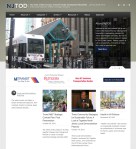
The new Transit-Friendly Development website, NJTOD.org
The Alan M. Voorhees Transportation Center, (VTC), a national leader in transportation research and education and the nucleus of transportation-related policy research, training and education at Rutgers University’s Edward J. Bloustein School of Planning and Public Policy, has launched a new outlet for information about development and redevelopment near transit facilities in New Jersey.
NJTOD.org, the new home for the long-established Transit-Friendly Development newsletter, will inform municipal officials, planners and advocates on the potential challenges and successes for transit-oriented development (TOD) in New Jersey’s communities. The website will describe TOD in New Jersey and highlight developments here and around the country: best practices, model programs, legislation and local problem-solving experiences. Additionally NJTOD.org will showcase TOD-focused research conducted by VTC.
NJTOD.org is a result of collaboration between the Alan M. Voorhees Transportation Center and NJ TRANSIT, the statewide transit agency.
For more information, please contact Stephanie DiPetrillo, senior research specialist, Alan M. Voorhees Transportation Center at sdipetrillo@ejb.rutgers.edu or 848-932-2872.
About the Alan M. Voorhees Transportation Center (VTC)
The Alan M. Voorhees Transportation Center is a national leader in the research and development of innovative transportation policy. Located within the Edward J. Bloustein School of Planning and Public Policy at Rutgers University, the Center brings to bear the full array of resources of a major research university on transportation issues of regional and national significance.
About NJ TRANSIT’s Transit Friendly Land Use Program
NJ TRANSIT is New Jersey’s public transportation corporation. Its mission is to provide safe, reliable, convenient and cost-effective transit service with a skilled team of employees, dedicated to our customers’ needs and committed to excellence. Covering a service area of 5,325 square miles, NJ TRANSIT is the nation’s third largest provider of bus, rail and light rail transit, linking major points in New Jersey, New York and Philadelphia. The agency operates a fleet of 2,027 buses, 711 trains and 45 light rail vehicles. On 236 bus routes and 11 rail lines statewide, NJ TRANSIT provides nearly 223 million passenger trips each year. NJ TRANSIT also administers several publicly funded transit programs for people with disabilities, senior citizens and people living in the state’s rural areas who have no other means of transportation. In addition, the agency provides support and equipment to privately-owned contract bus carriers. As the vehicle that connects New Jerseyans with employment, education, health care and recreational opportunities in and around the Garden State, NJ TRANSIT is vital to the state’s economic and social well-being, as well as its quality of life.
New Jersey is on the forefront of Transit Friendly Land Use. In recent years there has been a growing recognition that transportation plays a key role in the creation and maintenance of livable and sustainable communities. With that in mind, NJ TRANSIT has pledged a strong commitment to working with New Jersey communities to implement transit-oriented development. NJ TRANSIT’s transit-friendly program encourages growth and development where public transportation already exists. Not only is the community revitalization a benefit to the state, but transit-oriented development also reduces the growth of traffic congestion and improves air quality. In addition communities benefit as their train stations and surrounding areas are revitalized, making them attractive places for people to live, work and socialize.