
A report authored for New Jersey Policy Perspective (NJPP) by a practicum of graduate students from the Bloustein School, “Millennials in New Jersey: Migratory Patterns and Public Opinion,” analyzes the migratory patterns of young adults over time and busts the myth that millennials are “fleeing” New Jersey.
The report responded to the following policy questions posed by NJPP: Are millennials leaving New Jersey at a higher rate than young adults have in the past? And, Are millennials leaving New Jersey at a greater rate than millennials living in other states?
The authors conclude that the answer to both questions is “no.” An analysis of Census data shows that millennial migration patterns do not differ from the general migratory patterns of young people over time. Since 1983, the average rate of young adult (18-39 years old) out-migration is 3.1 percent and has remained stable
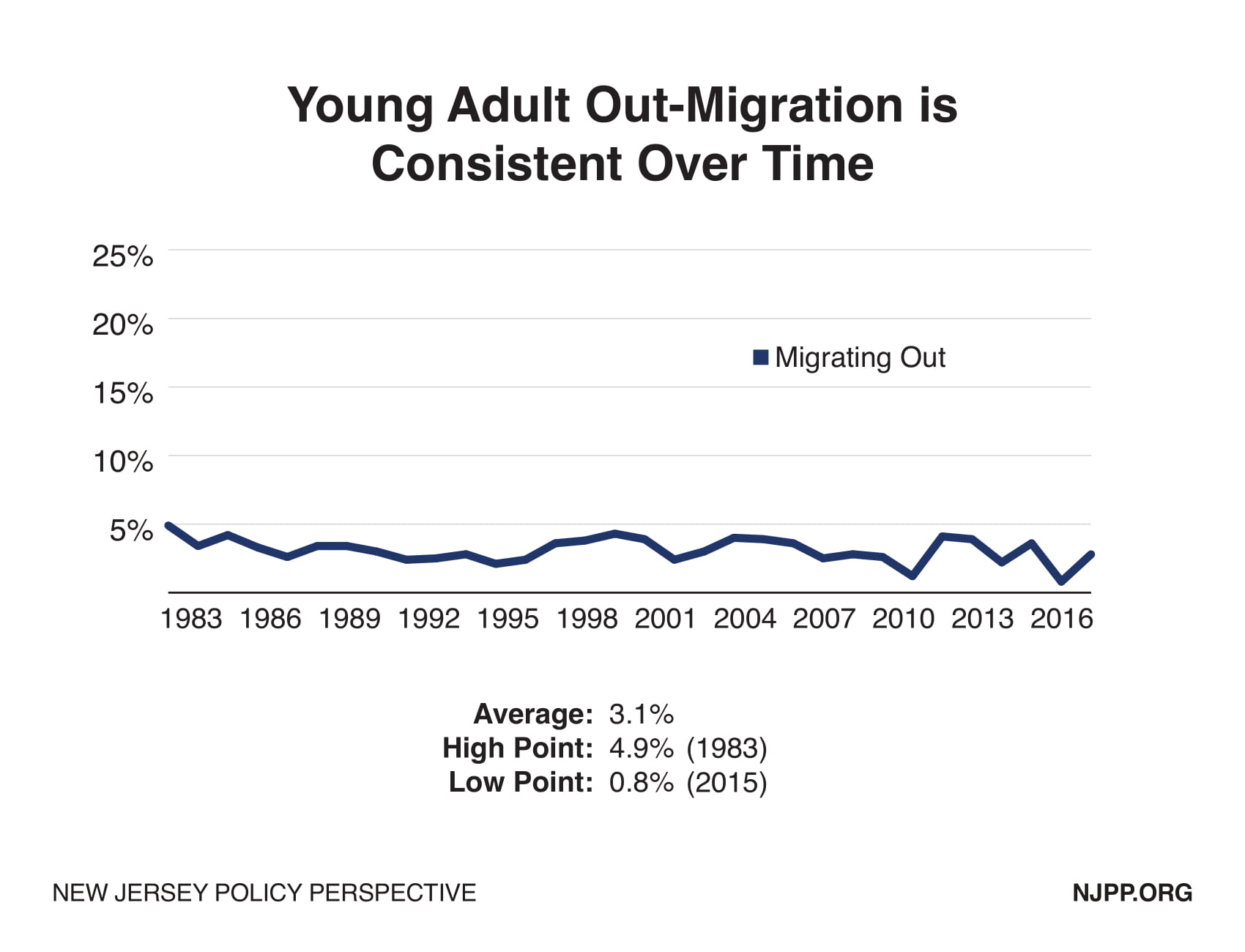
“Contrary to the conventional wisdom in the political community, millennials are not fleeing New Jersey,” said Dr. Cliff Zukin, Ph.D, public policy professor at Bloustein and report advisor. “In fact, the percentage of young people leaving New Jersey now is no different than it has been in the past, and is no different than the percentage of young people leaving surrounding states. This is not to say that young people don’t have issues with the high cost of living and housing in the state. They face the same problems as older residents, but are at an earlier stage in the life cycle when they have fewer resources.”
The practicum also interviewed twenty young adults to better understand the concerns of millennials in New Jersey. The case study found that millennials face the same problems that are commonly ascribed to all New Jersey residents; young adults are concerned about transportation infrastructure, the high cost of living in the state, and access to good jobs, but are at a point in the life cycle that makes these problems more acute.
“This report helps disprove some of the misleading stereotypes about the Millennial generation,” said Brandon McKoy, Director of Government and Public Affairs at NJPP. “Despite claims to the contrary, millennials are not fleeing the state, and they behave just like other New Jerseyans. Like young adults of previous generations, millennials need homes they can afford, high-paying jobs, and reliable transportation. Policymakers would be wise to prioritize investments in these areas.”
“This report challenges stereotypes about New Jersey’s millennials and shows we aren’t much different than other generations,” said Anish Patel, co-author of the report and a 2018 graduate of Bloustein. “It was exciting to research the migratory patterns of my peers and learn about the experiences and challenges of young adults across the state.
“As a millennial, I often notice assumptions made about my generation,” said Evan Friscia, co-author of the report and student at Bloustein. “As policymakers consider legislative remedies to issues facing young adults, I want to ensure that the decisions made are rooted in fact rather than speculation. We put a lot of time and energy into this report and I am incredibly proud of what we produced.”
Read the full report here.