
News
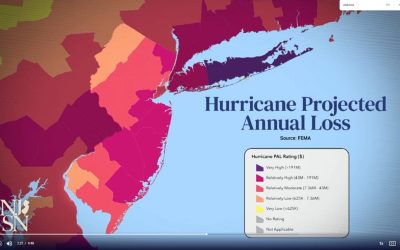
Climate change risk hits NJ homeowners’ insurance
“There is a message that comes through, which is that insurers are leaving a lot of the riskier markets because they perceive it to be risky. There’s also a sort of a standard pattern of first they raise premiums and then eventually they exit that market,” Clinton Andrews,

A plan is moving forward in N.J. to let homeowners save tens of thousands of dollars on their mortgages
“It’s sort of a painless way of saving,” Hughes said. “Very few of us have the discipline to religiously put away a portion of our salary to build up equity.”
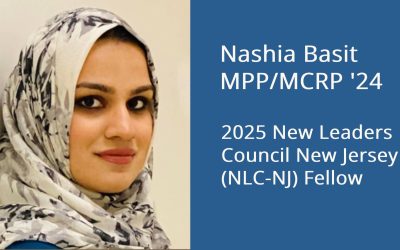
Nashia Basit (MPP/MCRP ’24) Named 2025 NLC-NJ Fellow
The Bloustein School’s Nashia Basit (MPP/MCRP ’24) was one of nine graduate students selected as a 2025 New Leaders Council New Jersey (NLC-NJ) fellow.

Salzman Presents on Why Legal Immigration Numbers Matter
The debate over high-skill guestworker supply is ongoing, with over 700,000 high-skill workers entering the U.S. annually through various programs, not just the H-1B visa. U.S. colleges, especially master’s programs, play a significant role in this supply chain, often targeting foreign students due to the financial benefits.

Andrews Explains How Climate Risks Impact Insurance in NJ
“There is a message that comes through, which is that insurers are leaving a lot of the riskier markets because they perceive it to be risky. There’s also a sort of a standard pattern of first they raise premiums and then eventually they exit that market,” Clinton Andrews,

Op-Ed: The future of New Jersey news is digital — and that’s OK
Earlier this month, I completed a report titled “The Future of New Jersey Journalism: Evolution, Not Extinction,” and it was recently released by the Center for Urban Policy Research at Rutgers’ Bloustein School of Planning and Public Policy. In it, I discussed the current environment facing New Jersey journalism, and recommendations on how it can thrive. I also analyzed the current debate about advertising legal notices in newspapers.
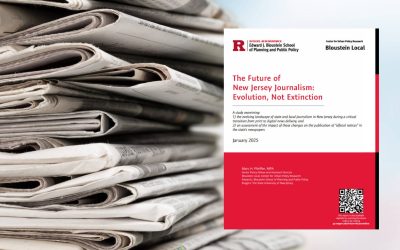
The Future of NJ Journalism: Evolution, Not Extinction
A new two-part study written by Marc H. Pfeiffer examines the evolving landscape of state and local journalism in New Jersey during a critical transition from print to digital news delivery and challenges those changes mean for the publication of “official notices.”

NJ watchdog chief owns house in Maryland, teaches in D.C., votes in Tinton Falls
By declaring the Maryland home as her primary residence, Williams Brewer might be in violation of the New Jersey First Act, Pfeiffer said. The law, enacted in 2011, requires public employees, including those at authorities, boards, bodies and commissions, to establish residency in New Jersey within one year of their hire date.
Report Release: R/ECON Forecast Winter 2025
R/ECON’s economic forecast for New Jersey as 2024 drew to a close once again shows a slowing trajectory, with annual gross domestic product (GDP) growth in 2025 projected to slow more sharply than in the prior forecast.

NJSPL: Key Insights on NJ College Completion
In December 2024, the National Student Clearinghouse Research Center released a report on credential attainment among college students nationwide[1]. The six-year completion rate in New Jersey continued its upward trajectory, with the 2018 cohort achieving a completion rate of 61%, representing a 0.9 percentage point gain from the previous cohort.

Stamato Commentary: Jimmy Carter’s pursuit of peace
A new op-ed by Linda Stamato reflects on the legacy of Jimmy Carter, highlighting his pivotal role in the 1978 Camp David Accords which forged a historic peace agreement between Egypt and Israel under challenging circumstances.

Data shows reduced public participation under virtual-only Lakewood Township meetings
“In person meetings have a value, they provide upfront interaction with the people they represent. It allows more direct participation and provides nuance that can’t be seen or observed or happen when you are on a webinar,” said Marc Pfeiffer, a senior policy fellow at the Bloustein Local Government Center for Urban Policy Research at Rutgers University. “In person requires a little more formality. It requires a better sense of decorum, which is representative of the official nature of what is going on.”