
New Jersey’s New E-Bike Laws: Safety, Impact, and What Comes Next
Leigh Ann Von Hagen & Gabrielle Cain
In recent years, e-bikes have become an increasingly popular form of micromobility, which are small, lightweight transportation devices designed for short trips and typically powered or assisted by low‑speed electric motors. E-bikes offer an affordable, efficient, and clean alternative to motor vehicles. Riders use them to replace short car trips, make first- and last-mile connections, travel to work or school, and for recreation.
As their use has grown, e-bikes have expanded mobility options for populations such as older adults, people with disabilities, students, people without driver’s licenses, low-income communities, and delivery workers.
A series of recent e-bike crashes, however, raised safety concerns across New Jersey and prompted new legislation. The following examines how NJ law S4834/A6235 came to be, what it aims to accomplish, and why continued dialogue is necessary to balance safety and accessibility.
What are E-Bikes?
The term “e-bike” is often used broadly to describe many different electric-powered devices. In practice, there is an important distinction between low-speed e-bikes, which have a top assisted speed of 20 mph or less, and their much faster, heavier cousins, which are often considered either Class 3 motorized bicycles or e-motos. E-motos, short for electric motorcycles, can reach significantly higher speeds and are not defined separately from other motorcycles in current law.
Distinguishing between lower-speed and pedal-assist e-bikes and high-speed e-motos is critical for effective regulation, enforcement, and public understanding.

Caption: Higher‑speed e‑moto at a university (left) and a low‑speed e‑bike at a grocery store (right).
2025 E-Bike Safety Concerns
Several tragic crashes in 2025 drew public attention to e-bike safety on NJ roadways, prompting calls for stronger regulations. While not all incidents involved low‑speed e‑bikes or were caused by bike rider behavior, they highlighted some of the risks faced by e‑bike users, pedestrians, and drivers as they travel together on our roads. Key examples include:
- Somers Point (July 2025): A 14‑year‑old was struck and killed while crossing at a mid-block roadway intersection with a bike path equipped with a marked crosswalk and flashing signals. The type of e‑bike involved was not identified.
- Scotch Plains (September 2025): A 13‑year‑old riding an electric device, possibly an e‑moto, was killed in a crash with a landscaping truck. Details remain unclear.
- Cranford (September 2025): Two 17‑year‑olds on e‑bikes were killed in a hit‑and‑run. They were struck by a motor vehicle traveling about 70 mph. The driver, who knew at least one victim, was later charged with first‑degree murder.
These tragedies reflect a range of factors that can contribute to serious crashes, including conflicts with motor vehicles, excessive speeds, distraction, and intentional harm, not simply reckless riding. They also shaped public perception and legislative urgency, ultimately contributing to the push for stricter e‑bike regulations.
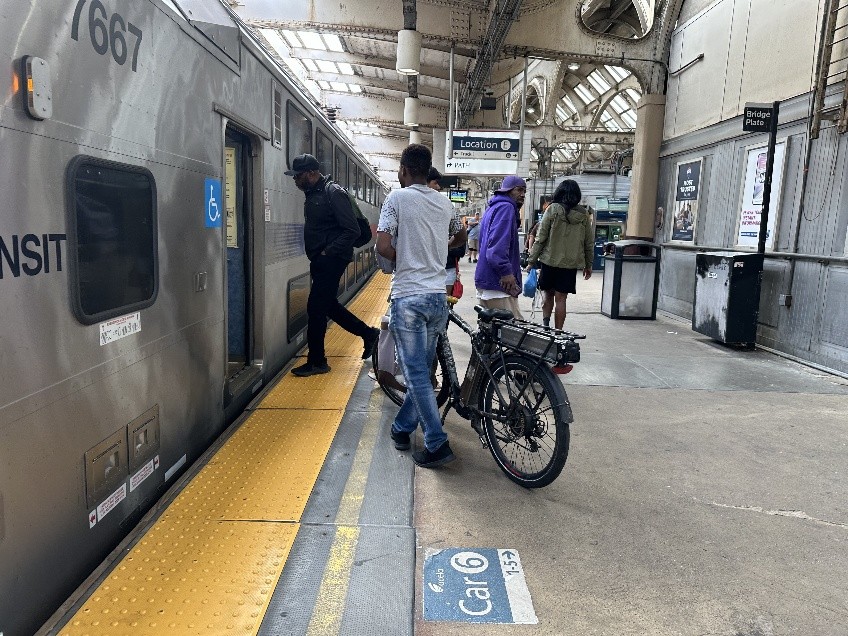
Caption: E-bikes used for deliveries and connections to transit in Newark, NJ.
Overview of the New E-Bike Law (S4834/A6235)
On January 19, 2026, former Governor Phil Murphy signed S4834/A6235 into law, establishing a new regulatory framework for electric bicycles in New Jersey. Introduced in November 2025, the legislation reflects lawmakers’ response to rising safety concerns and makes significant changes to how e‑bikes are defined and regulated.
Despite public confusion, the law does not change regulations for e‑scooters. Its requirements apply only to personal e‑bikes across all types and classes. Implementation and enforcement will be phased in, with the New Jersey Motor Vehicle Commission (NJMVC) playing a central role in administrative compliance, while police oversee enforcement on roadways.
Under the new law, the previous tiered class system (Class 1, 2, and 3) is replaced with three new categories: low-speed e-bikes, motorized bicycles, and electric motorized bicycles. The legislation introduces licensing, registration, and insurance requirements, establishes age limits for riders, and updates regulations on helmet use, license plates, labeling, and reporting standards. It also prohibits the sale of modification kits that alter a low-speed e-bike’s speed or power classification and temporarily bans the online sale of electric motorized bicycles for one year.
To support implementation, the law provides a grace period, allowing e-bike owners six months to come into compliance with the insurance, registration, and licensing requirements. In addition, NJMVC examination, registration, and licensing fees associated with low-speed e-bikes and motorized bicycles will be waived for one year.
Unfortunately, inconsistencies in the final legislation, particularly around how low‑speed e‑bikes are treated and how insurance and license plate requirements apply, have created significant confusion. Questions remain about implementation and enforcement, including how the law will affect underrepresented populations such as people who rely on e‑bikes and three‑wheeled e‑trikes for mobility, individuals with disabilities, and those who are unable to take licensing tests. There is also uncertainty about where numbered plates would be displayed on devices not designed to carry them.
These unresolved issues risk turning an affordable, environmentally friendly mode of transportation into a costly and complex regulatory burden, with new pathways for fines or even confiscation of these devices, which many people depend on for basic transportation.
Future Conversations
Because the law alters definitions and introduces new requirements for licenses, registration, and insurance, it will be important to monitor how implementation affects those who rely on e‑bikes for daily mobility, work, school, or recreation. Older adults, youth, people with disabilities, unlicensed riders, delivery workers, and low‑income residents most likely will experience disproportionate impacts.
Research from the Mineta Transportation Institute (MTI) indicates that, although any crash is tragic, incidents involving legal low‑speed e‑bikes remain relatively rare compared with crashes involving conventional bicycles or motor vehicles. MTI also finds that many safety concerns actually stem from overpowered devices, which are marketed as e‑bikes, but behave more like faster, heavier motor vehicles. Their work underscores the importance of distinguishing legal e‑bikes from higher‑powered devices like e-motos, clarifying definitions, and improving reporting and infrastructure.
Recent research by Hannah Younes, Robert Noland, and Leigh Ann Von Hagen with the Voorhees Transportation Center reinforces this point. A national analysis comparing injuries from e‑scooters, e‑bikes, and bicycles found that injury patterns vary by device type, with e‑bike riders experiencing injuries more similar to conventional bicyclists. The study highlights the need for clearer device classifications and more consistent data to guide policy. In New Jersey, police crash reports code e‑bike and e‑scooter riders as pedestrians, making it difficult to accurately track micromobility‑related crashes and adding to public confusion.
A broader safety strategy must extend beyond device regulation. Safer street design, protected bicycling facilities, and consistent on‑bike education beginning at a young age remain critical to improving outcomes.
Moving Forward
S4834/A6235 represents a significant shift in how New Jersey regulates e-bikes. The State must carefully evaluate whether the new framework improves safety without undermining mobility. Clear device definitions, consistent crash reporting, and enforceable standards matter. So do safe street design, speed management, and education. Regulation alone cannot resolve conflicts rooted in roadway design and driver behavior.
Policymakers should monitor how licensing, registration, and insurance requirements affect riders who depend on e-bikes for travel, and those who may no longer be able to use e-bikes because of the new requirements — particularly older adults, youth, people with disabilities, delivery workers, and low-income residents.
New Jersey now faces a critical test: whether it can respond to safety concerns without restricting access to affordable, lower-emission transportation options. Engaging researchers, practitioners, enforcement officials, and affected communities will be essential to revising inconsistencies in the law and getting this balance right. Safety and accessibility are not competing goals. With careful implementation and data-driven adjustments, New Jersey can advance both.