
by Cecille de Laurentis MPP/MCRP ’20
A panel of experts hosted by the Bloustein School, the Rutgers School of Social Work, and AARP on “Building Healthy Communities for All Ages in New Jersey” addressed the projected increase in population for older age groups nationwide and what this means for planning and policymaking in New Jersey.
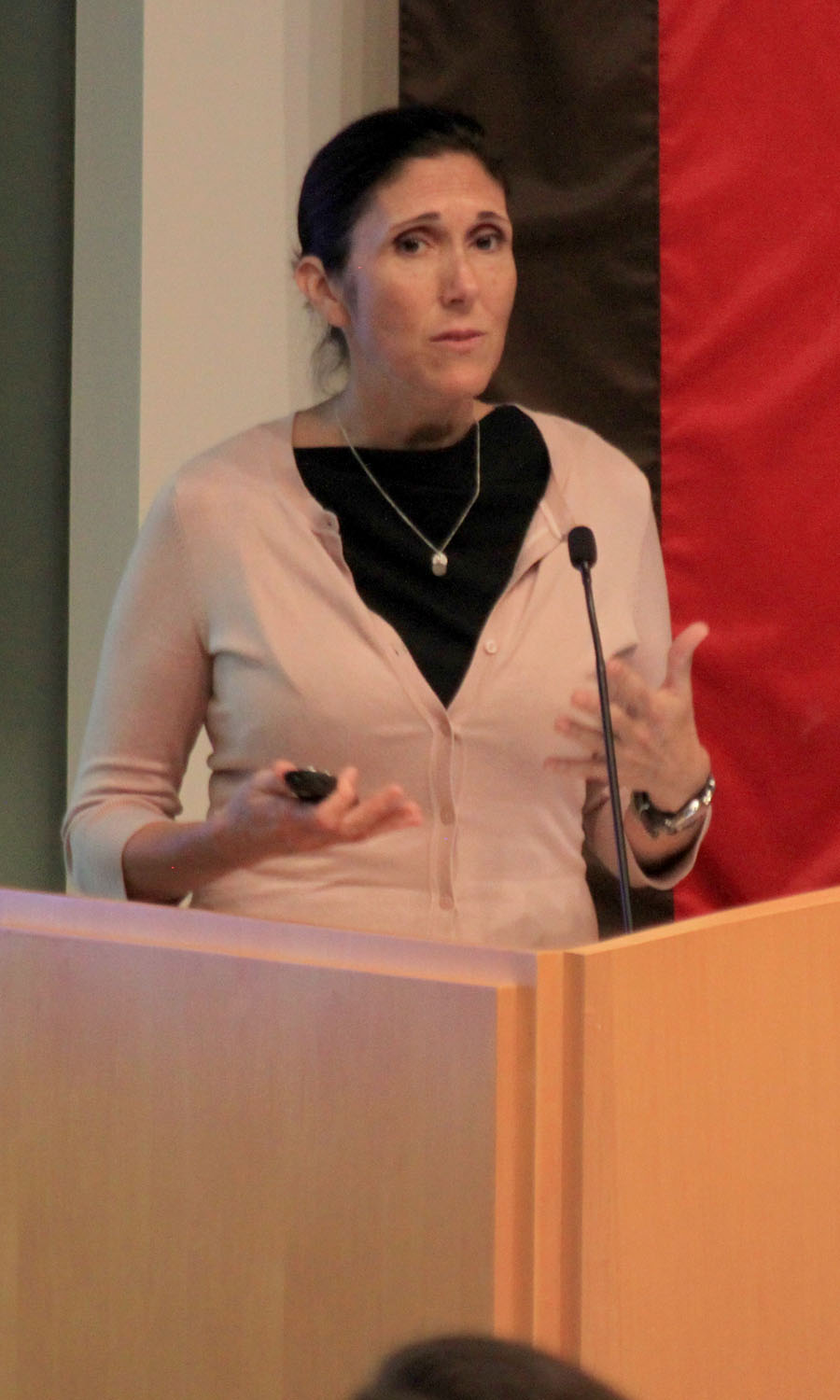
Danielle Arigoni, Director of Livable Communities, AARP
Danielle Arigoni, AARP’s Director of Livable Communities, introduced the idea of the “silver tsunami” to those of us who weren’t aware: in 2035, for the first time in US history, more of the population will be over 65 than under 18. She showed the audience maps of how the proportions would change nation-wide, and in New Jersey in particular.
What are some of the issues around home and community that face older adults? Transportation, she noted, is huge—many older people prefer not to drive or cannot for physical reasons, so it’s important for them to have access to reliable public transportation. According to Arigoni, eight out of ten adults emphasize street accessibility and readable signs as important components of livable communities. Although most adults who are aging want to remain in their communities, less than half believe they will be able to because of issues like these. Arigoni showed us some of the resources that can be found on AARP’s website (aarp.org/livable), such as a “Livability Index” online tool and databases where volunteers can contribute information.
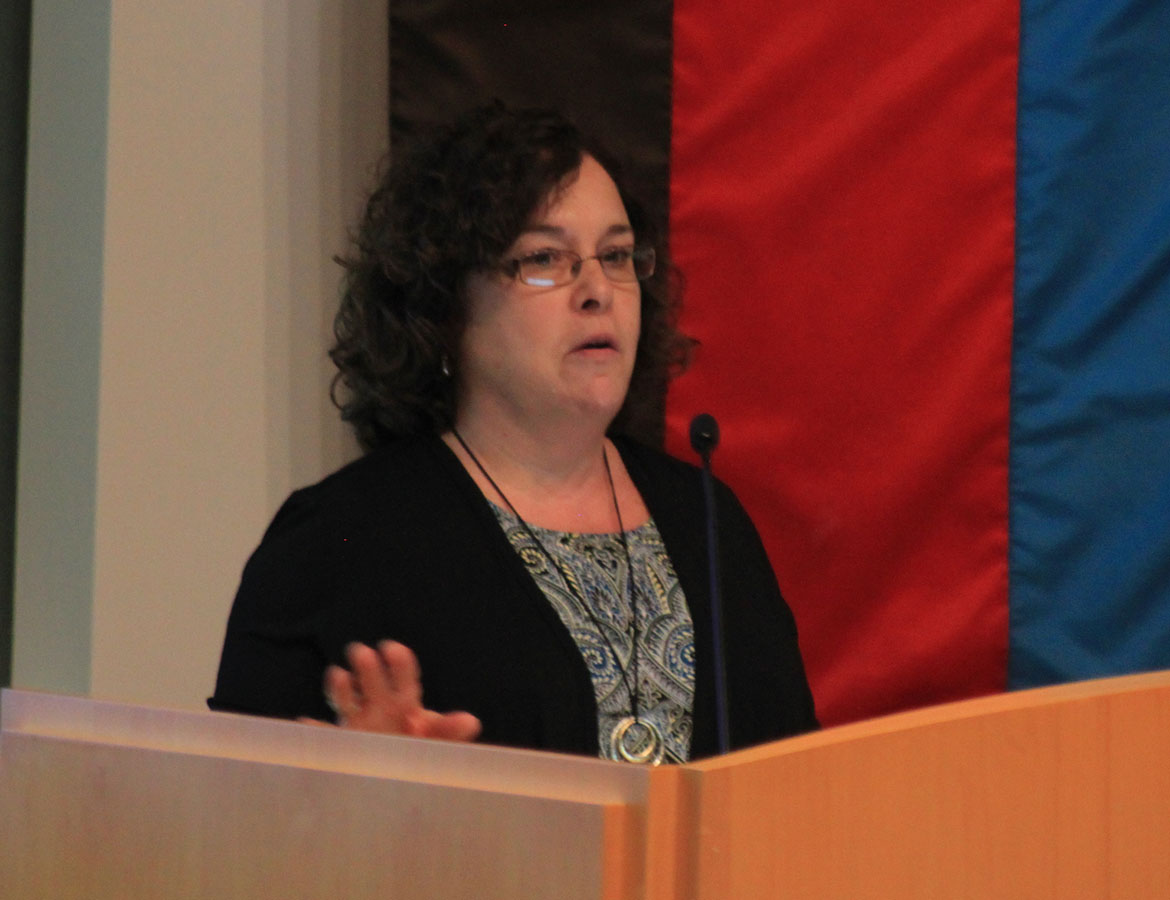
Karen Alexander, Managing Director, NJTIP@Rutgers
Karen Alexander, the Managing Director of the Bloustein School’s New Jersey Travel Independence Program (NJTIP@Rutgers), also emphasized mobility as crucial for New Jersey’s aging population, as mobility relates to social connectivity, “Having a greater number of social connections is associated with a 50% reduced risk of premature death,” she noted. NJTIP conducts one-on-one travel instruction for seniors who feel nervous about trying public transportation for the first time. They also advocate for age-friendly transit, which includes design issues such as clear signage, weather protection and seating, live customer support, reduced fare programs, and more.
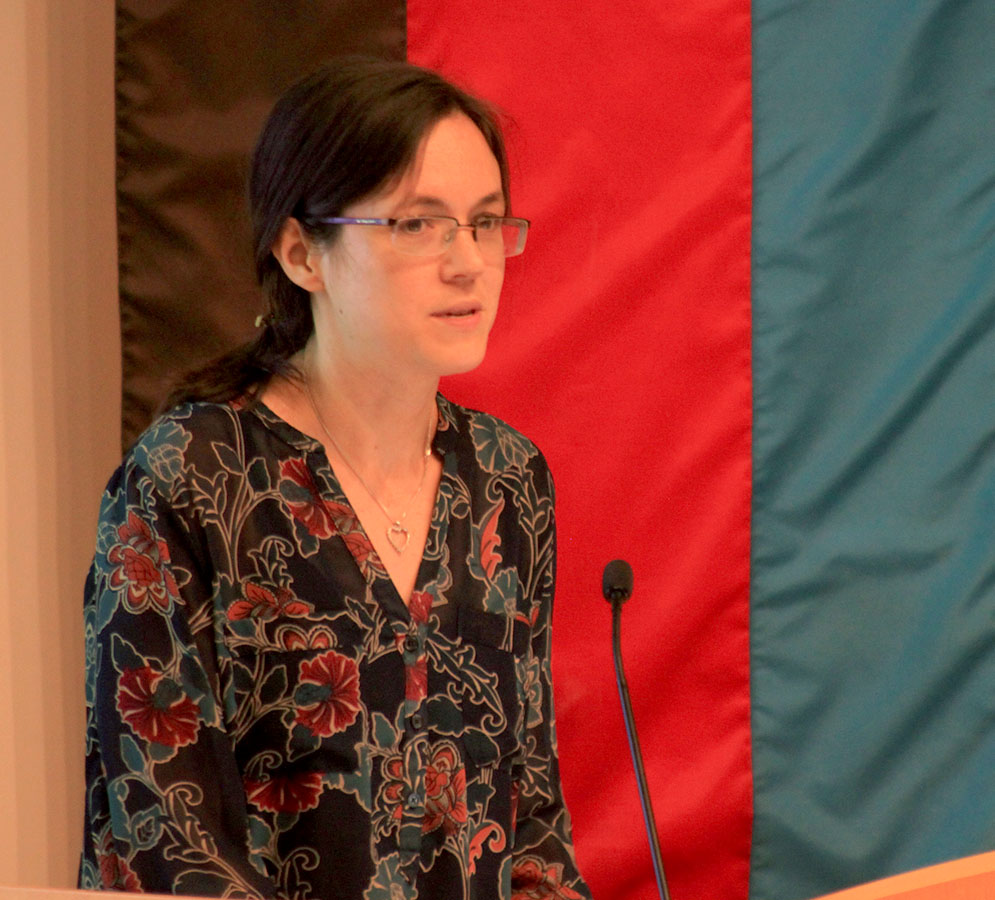
Emily Greenfield, Associate Professor, Rutgers School of Social Work
Emily Greenfield, Associate Professor at the School of Social Work, closed the panel with a discussion of age-friendly initiatives (AFIs) in communities. She introduced municipalities currently implementing AFIs—for example, Princeton and Montclair have been working on AFIs since 2014—and discussed who was leading the local work, including community groups and foundations with a particular interest in age-friendly communities. When asked about how AFIs incorporate or recognize work that is already being done locally, Dr. Greenfield responded, “Age-friendly initiatives do a lot of the work that is being done already, but there’s something qualitatively distinct when a community comes out and uses the banner of age-friendly as a framework.”
During the question-and-answer session, audience members pointed out opportunities to expand the work discussed by the panel. One guest who identified himself as being over 80 years old said he would like to see someone his age on a future panel. Community leader Teresa Vivar, who works with a local Latinx organization, said she hopes that those working on age-friendly communities reach out to grassroots organizations like hers and include older Latinx populations with translated resources, et cetera. “Our communities are growing so fast in this age, and it’s time for us to have this conversation about how we can help you,” said Vivar. Arigoni identified existing resources in Spanish that AARP offers and stated that they will work on expanding this range.
Click here to watch the recording of the lecture.