
How is housing really used at the Jersey Shore? In Professor Clint Andrews’ graduate seminar, students are digging into the temporality of the iconic Jersey Shore, consisting of 55 coastal resort communities that are both vacation destinations and fully integrated into New Jersey’s high-cost housing market.
Housing is a long-lived, high-cost asset. Yet at the Shore, it serves a complex mix of year-round residents, second-home owners, short-term renters, day-trippers, and seasonal workers. What happens to housing utilization across seasons, weekends, and even hours of the day? And what does that mean for affordability?
Using novel behavioral big data, including mobile phone trace data, consumer spending data, electricity usage, sewage treatment flows, traffic counts, and short-term rental bookings, students are quantifying seasonal housing patterns with precision. Their goal:
- Understand how different occupant types influence availability and affordability
- Analyze real-world big data tied to housing and human settlements
- Explore how housing submarkets interact
- Develop informed policy recommendations
This isn’t just an academic exercise. In an era of affordable housing shortages, understanding how high-amenity locations function over time is essential for smarter planning and better policy.
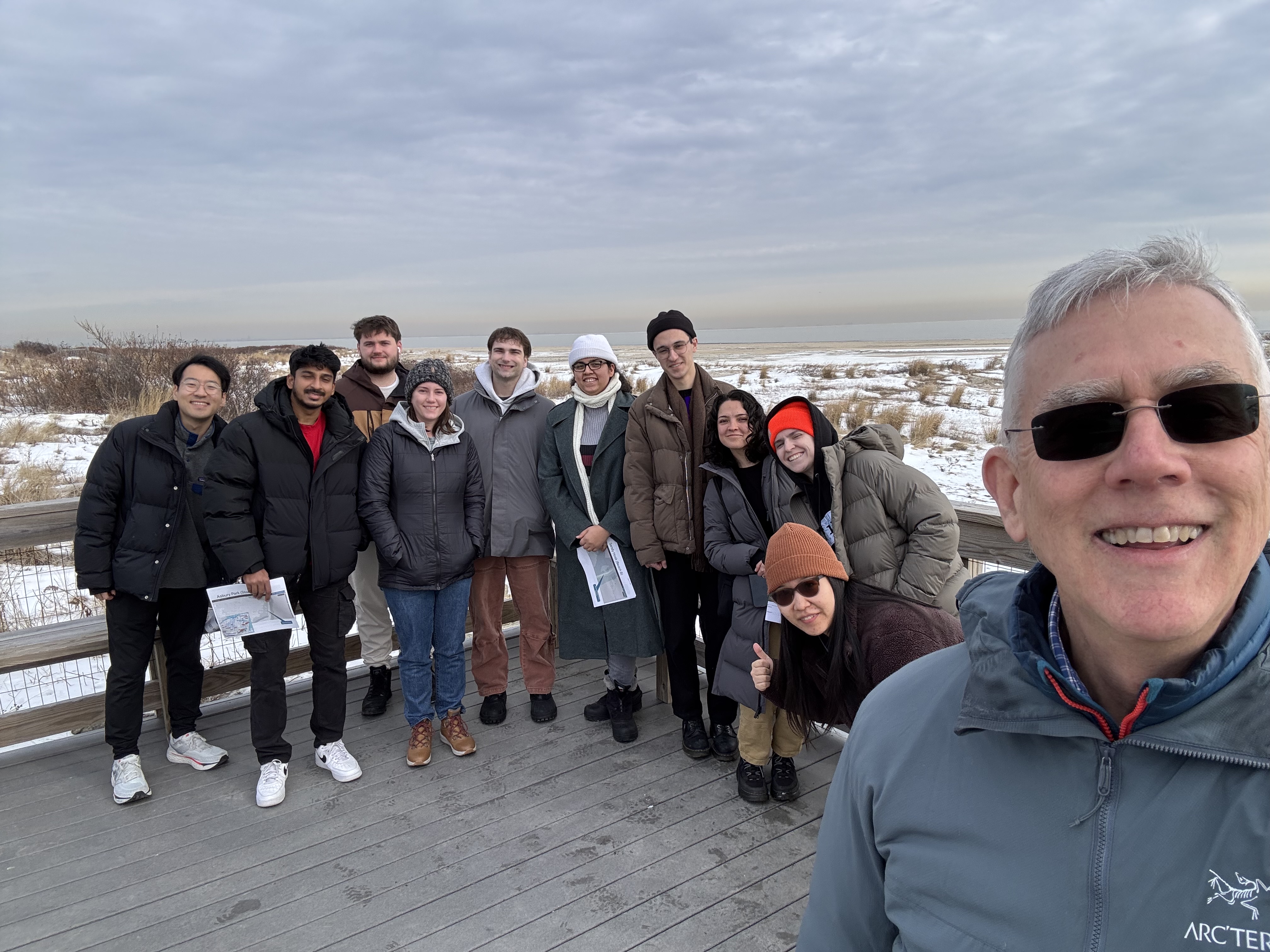
A good group of MCRP, MPI, and PhD grad students. We’re investigating the seasonal differences in usage of Jersey Shore resources by means of big data on sewage flows, traffic counts, and mobile phone usage. Field trip went along the Atlantic coast from Sandy Hook (shown) to Asbury Park.
Fieldwork stretched from Sandy Hook to Asbury Park, because sometimes the best data conversations happen with sand in your shoes.
Learn more about the Public Informatics, Urban Planning, and Doctoral programs.