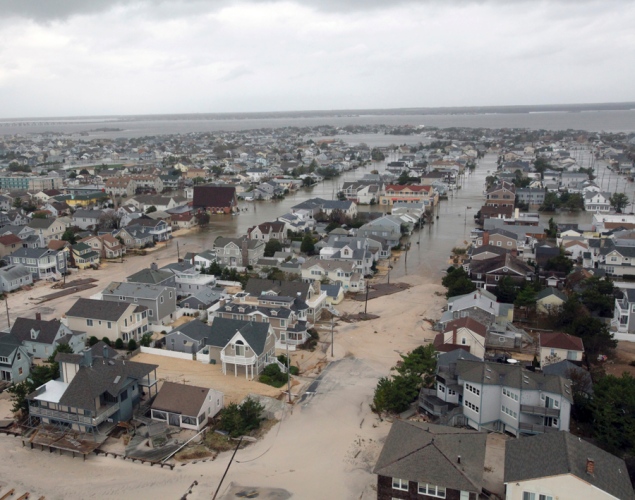
In partnership with New Jersey Future and the College of New Jersey, Rutgers University is leading a project to assess health impacts of post-Sandy decision-making and recovery. The project is funded by The Health Impact Project, a collaboration of the Robert Wood Johnson Foundation and The Pew Charitable Trusts.
The new project, which begins in September 2014 and extends to February 2016, applies the fast-growing practice of Health Impact Assessment (HIA) to post-disaster decision-making. By combining scientific data, health expertise and public input, HIA provides decision-makers with a tool to consider the potential positive and negative health outcomes of decisions for which health impacts may ordinarily be overlooked. HIAs in the United States have been applied to decision-making in a diversity of sectors including land use, energy, transportation, housing and economics. The Rutgers project is one of the first times HIA is being applied to disaster recovery decision-making in the United States.
View/download Post-Sandy HIA Project Summary (PDF)
Press Release: New Rutgers Initiative to Examine Health Impacts of Post-Sandy Decision Making