
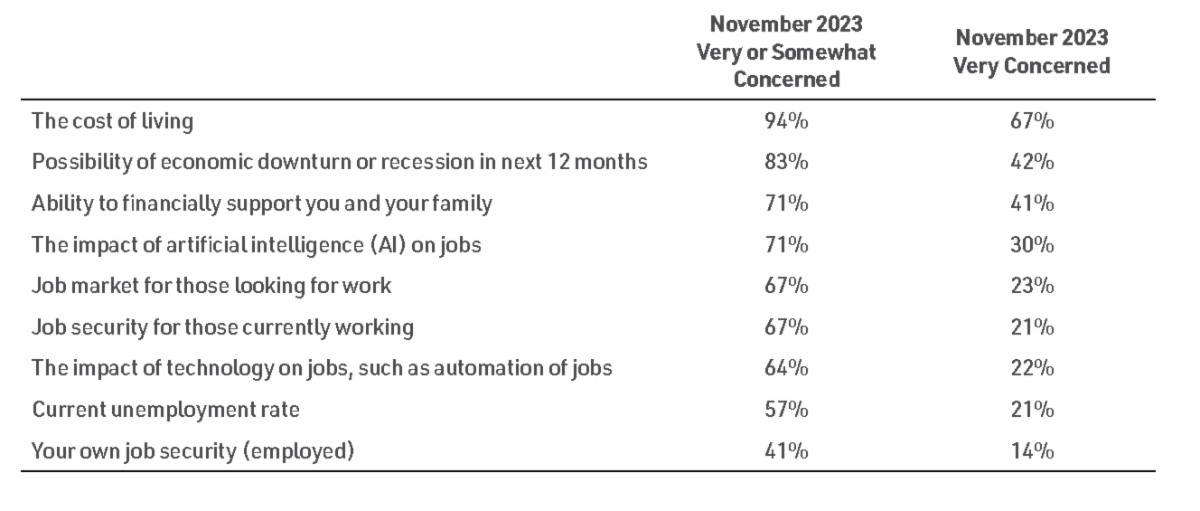
Two in three U.S. workers are very or somewhat concerned about the job market for job seekers as 2024 approaches, according to a national probability-based survey of 1,038 U.S. adults age 18 and older, including 737 people in the labor force. The survey was conducted in mid-November 2023 by the Heldrich Center for Workforce Development.
Additionally, over 8 in 10 U.S. workers express anxiety about the cost of living and the possibility of an economic downturn in 2024. Fifty-seven percent of U.S. workers say they are very or somewhat concerned about the unemployment rate in the fourth quarter of 2023, including 21% who are very concerned (see Table 1).
Table 1: Percent Very or Somewhat Concerned/Very Concerned About Economic Indicators, Labor Force Sample, November 2023
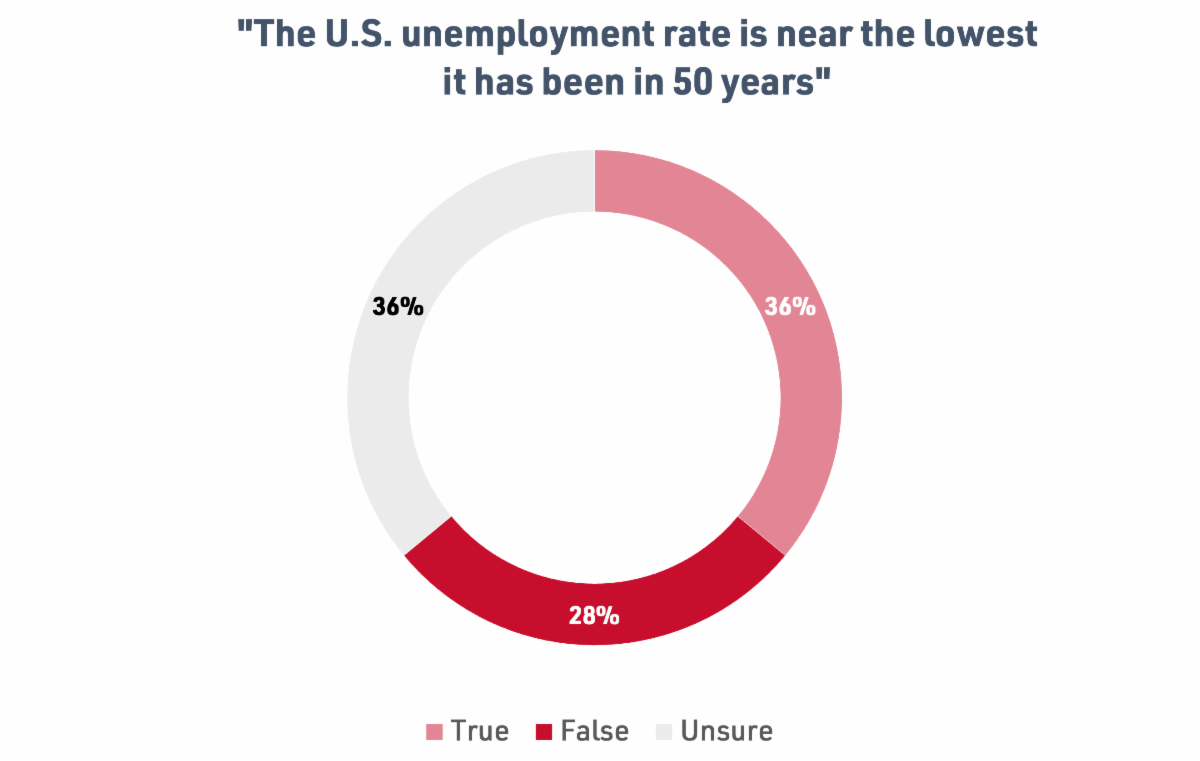
When asked if the unemployment rate is near the lowest it has been in 50 years, one-third of U.S. workers (36%) say that is true, 28% say that is false, and the remaining 36% are unsure (Figure 1). These numbers are unchanged when the opinions of people who are not working and those who are unemployed and not looking for work are examined. (See topline at either of the links above).
(According to the U.S. Bureau of Labor Statistics, the unemployment rate was 3.4% and 3.5% from September 1968 to August 1969, and 3.5% in November and December 1969. It was also 3.5% in September 2019, and January and February 2020. Since February 2022, it has fluctuated between 3.4% and 3.9%, reaching 3.4% in April 2023 and 3.5% in July 2023.)
Figure 1: Percent True/False/Unsure About Unemployment Rate, Labor Force Sample, November 2023
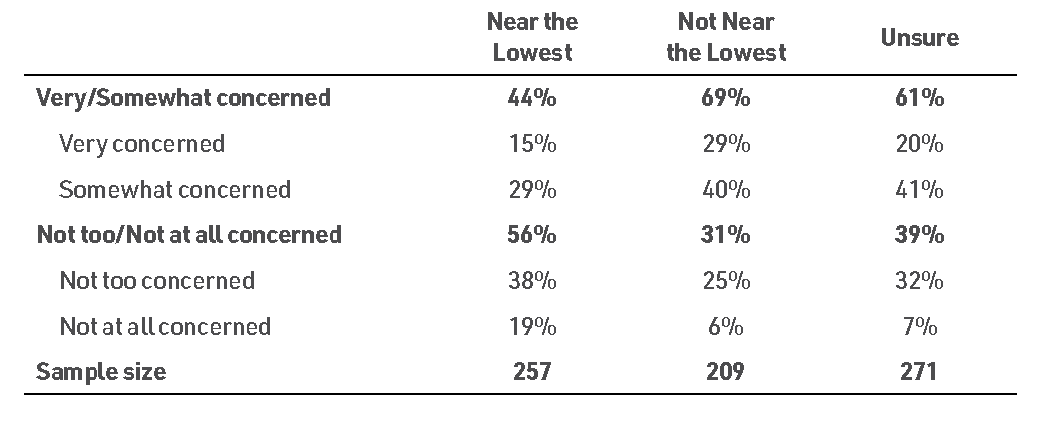
Despite an unemployment rate that hovered just below 4% for nearly two years, most U.S. workers don’t know that unemployment rates are near the lowest levels since the 1960s and express concerns about the labor market. This lack of awareness about the labor market was also reflected in an August 2018 Work Trends study. At that time, half of U.S. adults believed the unemployment rate was at least 7% or were not sure, even though the reported rate was at or below 4.0% for several months. Even U.S. workers (44%) who say the unemployment rate is near the lowest it has been in 50 years are very or somewhat concerned about the unemployment rate (see Table 2).
Table 2: Percent True/False/Unsure About Unemployment Rate by Unemployment Rate Concern, Labor Force Sample, November 2023
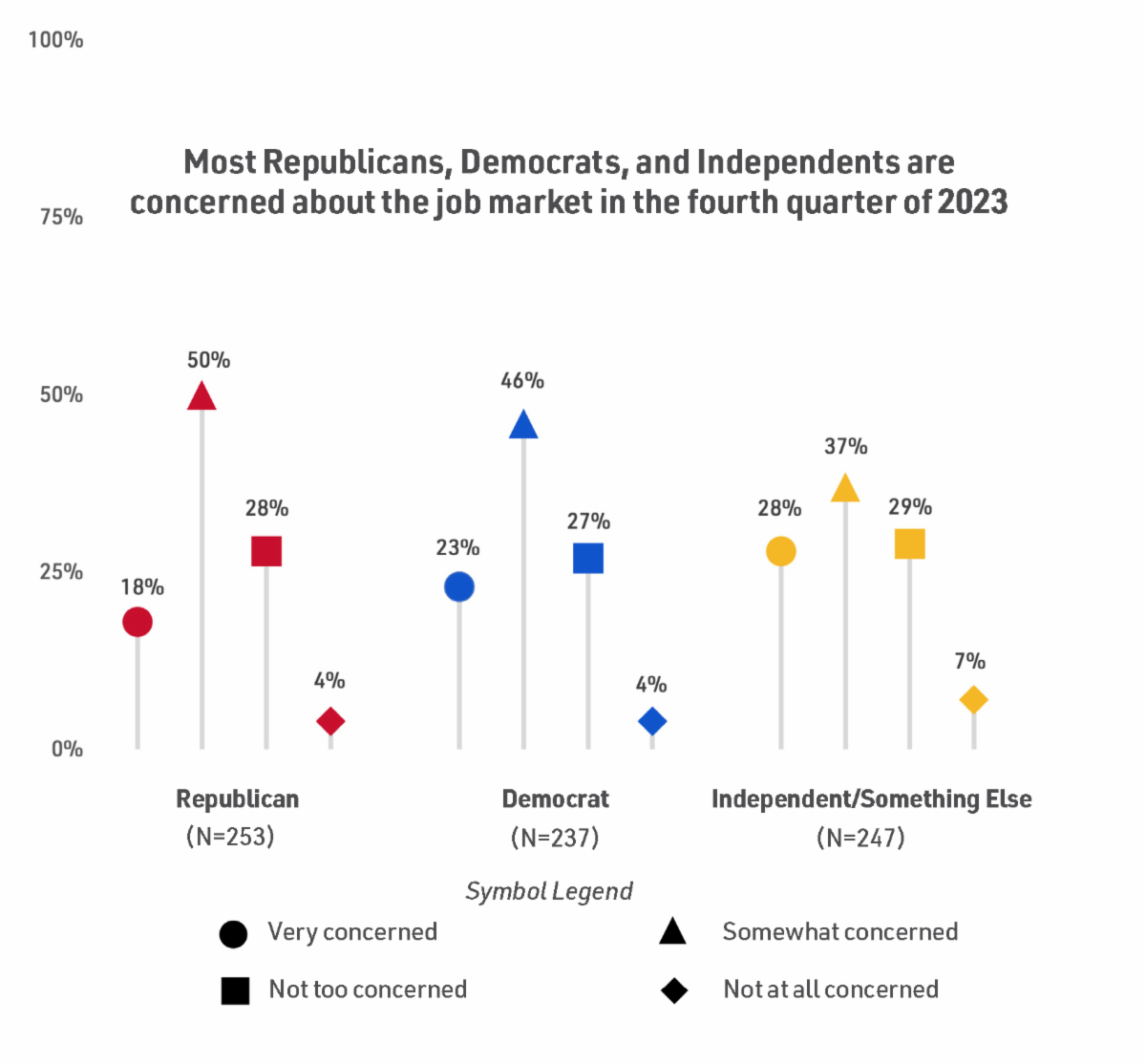
Notably, there are only minor differences in the opinions of those who identify as Democrats, Republicans, and Independents. Sixty-nine percent of Democrats, 68% of Republicans, and 65% of Independents are very or somewhat concerned about the job market (see Figure 2).
Figure 2: Percent Concerned About the Job Market for Those Looking for Work, Labor Force Sample by Political Party, November 2023
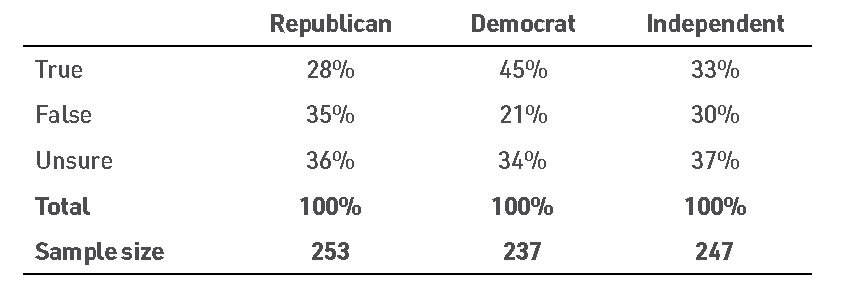
While 62% of Independent workers, 61% of Republican workers, and 49% of Democratic workers say they are concerned about the unemployment rate, most either do not think the measure is near the lowest it has been in 50 years or are unsure. (See Table 3.)
Table 3: Percent True/False/Unsure About Unemployment Rate by Party Identification, Labor Force Sample, November 2023
The nation’s lowest-income workers express the greatest concern about the economy and the labor market, similar to findings from a May 2023 Work Trends study of U.S. adults. Workers living in higher-income households are more likely to say the unemployment rate is at its lowest in 50 years. Twice as many U.S. workers (73%) living in households earning less than $50,000 per year are very or somewhat concerned about the unemployment rate, compared to the nation’s higher earners ($100,000 and above) at 36% and their job security (53% vs. 27%). Tables with household income breakdowns split three ways (less than $50,000, $50,000 to less than $100,000, and $100,000 and above) are presented in the topline.