
News

Question: Where are all the New Jersey college students? Answer: ‘The enrollment cliff’
“We’re facing the cliff, because those born in ’08… they’re just entering their high school graduating years,” said James Hughes, Dean Emeritus of Rutgers University’s Edward J. Bloustein School of Planning and Public Policy.

Lawyers Take Home Over $3 Million from School Buildings Fight
Marc Pfeiffer, the associate director of the Bloustein School at Rutgers, put it this way in a new report about the future of journalism in New Jersey: “Despite some contemporary criticisms of (editorial opinion),” he wrote, “it has, over many decades, helped generate public discourse and solve complex and controversial issues facing our society.”

NJSPL Report: Higher Education in New Jersey – A Policy Review
New Jersey’s state higher education plan, “Where Opportunity Meets Innovation – A Student-Centered Vision for New Jersey Higher Education” (the Plan), was introduced in 2019. It envisions an ecosystem where every resident can attain high-quality credentials regardless of their circumstances.
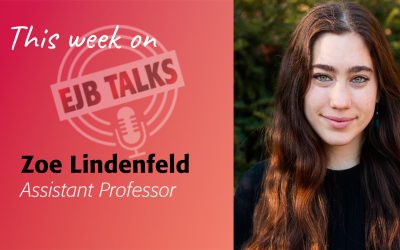
Healthcare, Policy, and the Opioid Crisis: Bridging Gaps in Access
This week on EJB Talks Assistant Professor Zoe Lindenfeld talks to Dean Stuart Shapiro about her research on substance use disorders, particularly the opioid crisis, and its ties to healthcare access and policy. She explains how her interest in the field was sparked by the opioid epidemic’s emergence as a public health crisis.

Lights out: A final word from N.J.’s only editorial board
Marc Pfeiffer, the associate director of the Bloustein School at Rutgers, put it this way in a new report about the future of journalism in New Jersey: “Despite some contemporary criticisms of (editorial opinion),” he wrote, “it has, over many decades, helped generate public discourse and solve complex and controversial issues facing our society.”

Public Policy and Surveillance Tech
Municipalities should have a sense of the technology’s costs (financial, societal, and reputational) versus its benefits. Financial costs include staff management time and storage fees; they will rise with the volume of data stored. Societal and reputational costs may come into play when deciding what physical locations warrant surveillance and if the technology is obvious or invisible to those affected by it.

Lindenfeld & Mauri Find Uptick for MOUD at FQHCs
The percentage of patients with an SUD who received MOUD each year, increased over time from 10.01% in 2017 to 24.75% in 2023.

Community health centers show large uptick in prescribing meds for opioid addiction
Lindenfeld and Mauri explained that efforts aimed at improving access to medications for the treatment of opioid use disorder at federally qualified health centers should particularly target facilities that serve a large proportion of nonwhite patients and patients experiencing homelessness.

NJSPL: Ensuring Accurate & Equitable Vaccination Info
The study evaluated the accuracy, readability, and understandability of vaccination information from ChatGPT and the CDC in both English and Spanish. This is critical as previous evaluations have mostly focused on English, overlooking the needs of non-English speakers in the U.S. We compared responses to common vaccination-related questions using both quantitative and qualitative methods.

2025 IHC Grant Program Funding Opportunities
The grant program seeks to advance practice, systems and environmental changes to enhance healthy community outcomes for people with disabilities who also may experience societal discrimination as a result of, but not limited to age, race, socioeconomic or immigration status, and/or sexual orientation.

Ralph et al. Review e-Scooter Pilot Projects
Well-run and well-received pilot projects can help overcome initial public opposition to new policies or projects. Planners should use four strategies to maximize the potential of their pilots.
Trump’s regs freeze trips up Biden’s green rules
“Regulatory freezes are standard practice for incoming administrations,” Stuart Shapiro, dean of the public policy school at Rutgers University, told POLITICO’s E&E News. “They want to pause any actions not completed by the previous administrations so they can decide whether they want to complete them.”