From left to right: Health Administration program executive director Soumitra Bhuyan (team advisor) with team members Diptaraj Singha, Ania Gill, Julianna Baldwin (team captain), and Mohamed Ghanem.
Bloustein School students secure top honors in national competition featuring 40 graduate program teams from across the United States.
A team of Master of Health Administration (MHA) students from Rutgers University–New Brunswick’s Edward J. Bloustein School of Planning and Public Policy won the graduate division title at the 8th Annual Penn State Health Policy and Administration Virtual Case Competition, a national competition that brought together approximately 60 undergraduate and graduate teams representing 38 universities from across the United States. The event was held virtually from October 16-22, 2026.
Participants were challenged to analyze complex, real-world healthcare management problems and develop innovative, evidence-based solutions.
The Rutgers MHA group included Julianna Baldwin (team captain), Mohamed Ghanem, Ania Gill and Diptaraj Singha. The team advanced through multiple competitive rounds before securing first place in the graduate division, demonstrating exceptional strategic thinking, analytical rigor, teamwork and leadership. The team was coached by Soumitra Bhuyan, PhD, MPH, Executive Director of Health Administration Programs and Associate Professor at the Bloustein School.
“This is an extraordinary accomplishment for our students and a proud moment for the entire Bloustein School,” said Stuart Shapiro, dean of the Edward J. Bloustein School of Planning and Public Policy. “Their success reflects the strength of our academic programs, the dedication of our faculty and our commitment to preparing future leaders who can address complex challenges facing health care organizations.”
Throughout the competition, the team worked collaboratively to analyze a complex health care management case, evaluate strategic alternatives, develop actionable recommendations and prepare an executive-level presentation. Their preparation involved extensive research, financial and operational analysis, multiple practice presentations and refinement of their recommendations in anticipation of questions from health care industry leaders.
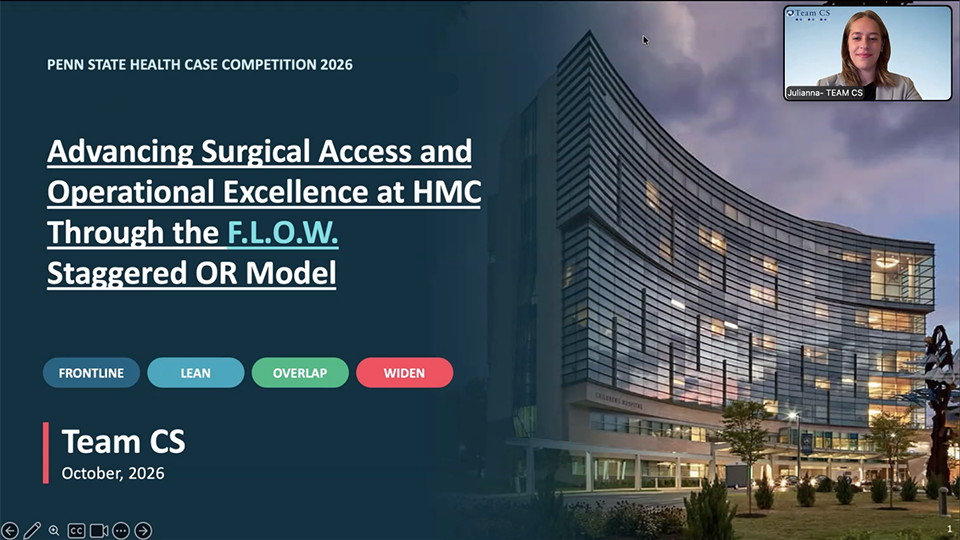
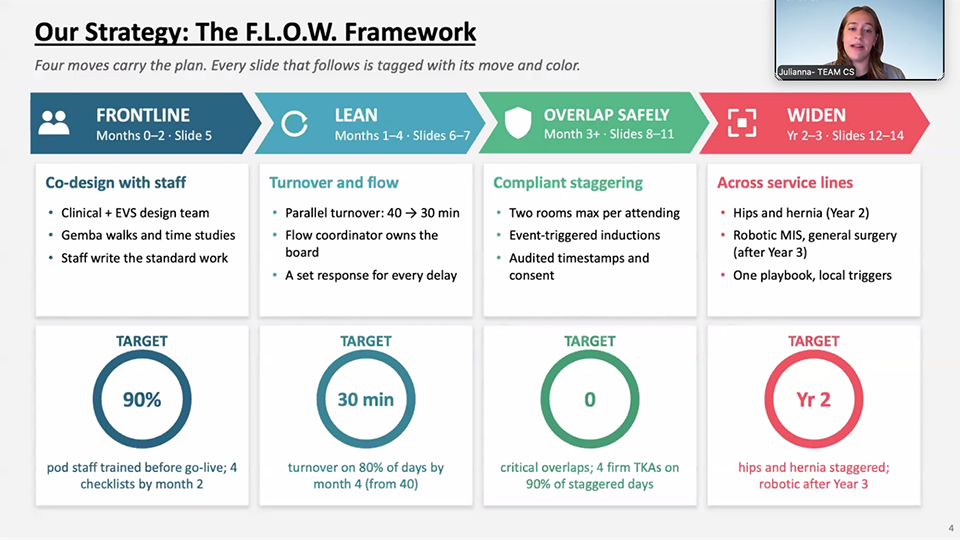
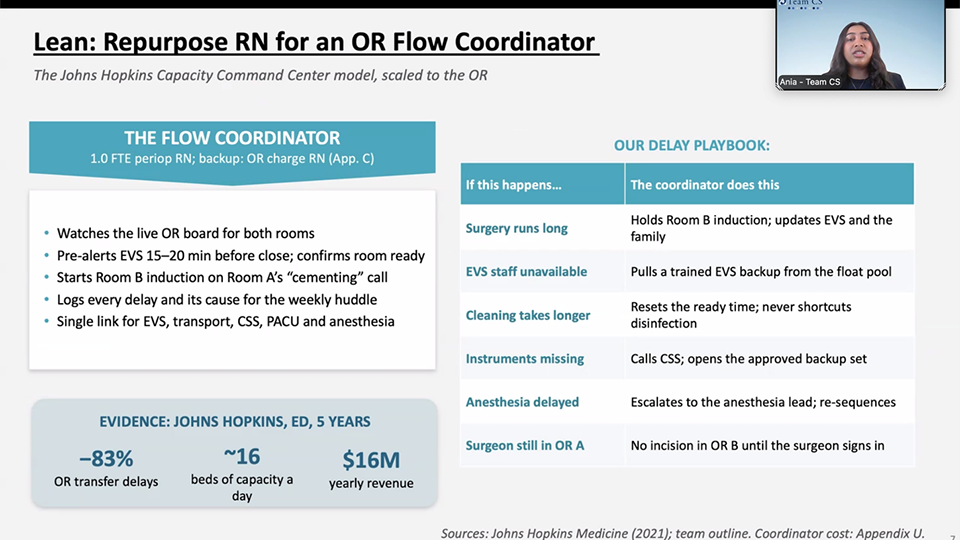
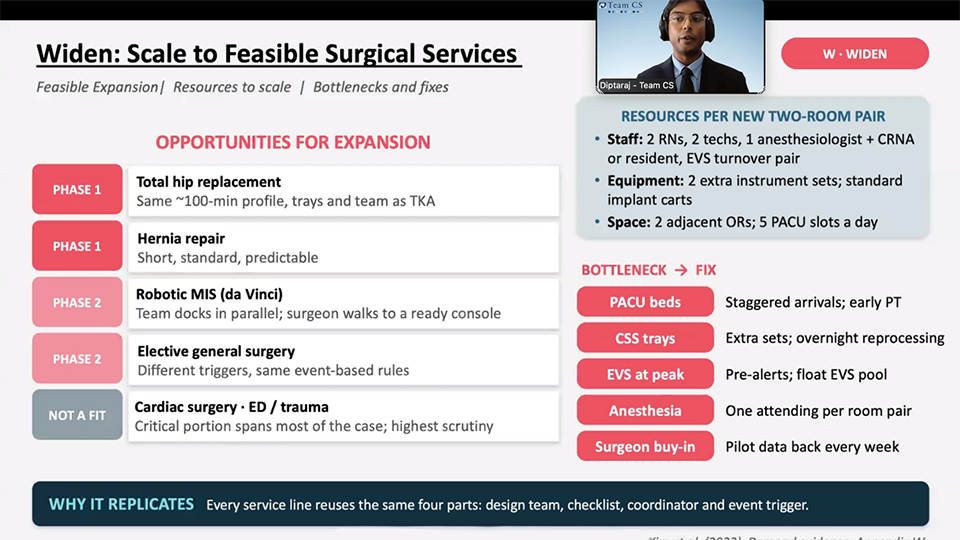
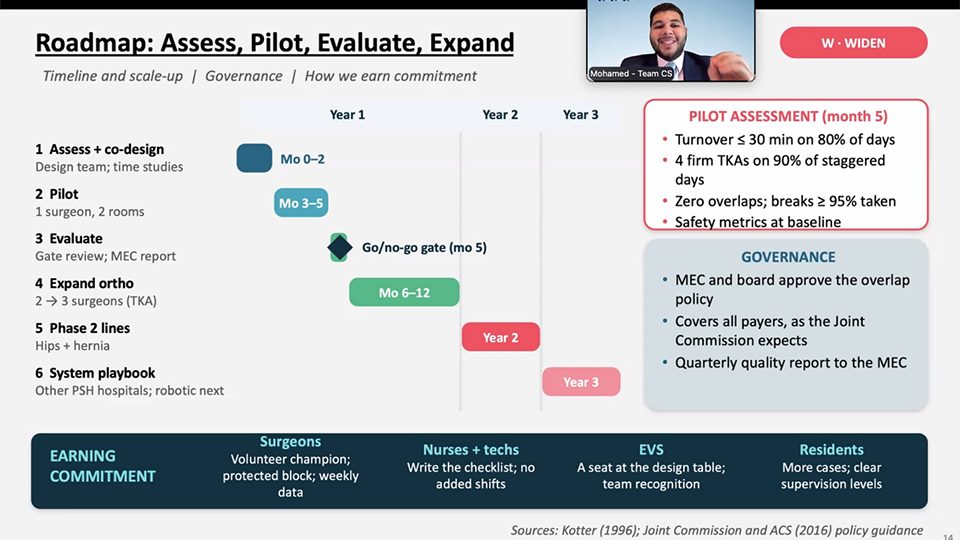
At the finals on Thursday, Oct. 22, the team had 10 minutes to present the overview of its F.L.O.W. Framework, a plan to improve surgical access at the case’s academic medical center by reducing perioperative delays and making better use of existing operating room resources. The approach combines staff-led process improvement, lean workflow changes and coordinated OR scheduling, with safety checks built in. The team recommended a phased rollout, beginning with a focused pilot and expanding only if performance and safety measures support it. They then answered specific questions about their proposal from the panel of judges.
“Winning first place in a national competition of this caliber is wonderful for Rutgers Health Administration,” said Bhuyan. “I am incredibly proud of these students, not only because they won, but because of their dedication, resilience, intellectual curiosity and professionalism. They approached the challenge as future health care executives, balancing strategic priorities, operational realities and financial sustainability.”
Baldwin (PPP ’25), Gill (PH ’25) and Ghanem (Biological Sciences ’26) are all Rutgers undergraduate alumni who continued their academic journeys in the Rutgers MHA program. Bhuyan taught and mentored all three during their undergraduate studies, encouraging them to pursue graduate education in health care management and further develop their leadership potential.
“What makes this journey especially meaningful is that Dr. Bhuyan recognized our potential as undergraduate students and continued to invest in our growth,” said Baldwin. “From encouraging us to pursue the Rutgers MHA program to challenging us to think strategically and approach complex problems as future health care executives, his mentorship has been instrumental in our development.”
She also emphasized the teamwork that made the win possible. “This experience challenged us academically and professionally, but what made it truly special was the team behind it,” she continued. “We challenged one another, learned from each other and supported each other throughout the competition. I could not have asked for a better team.”
For Bhuyan, this success illustrates the long-term impact of investing in students’ academic and professional development.
“One of the most rewarding aspects of being an educator is watching students grow from undergraduates exploring their career interests into confident graduate students and emerging health care leaders,” he said. “Having taught and mentored members of this team during their undergraduate years, seeing them win first place in a national competition is particularly meaningful. Their success demonstrates what sustained mentorship, experiential learning and student dedication can accomplish.”
The Penn State Health Policy and Administration Virtual Case Competition provides students with opportunities to apply classroom knowledge to complex health care management challenges. Competing teams are expected to analyze organizational problems, evaluate evidence, develop strategic recommendations and present their solutions to health care executives and industry professionals serving as competition judges. The experience challenges students to consider the financial, operational, clinical and strategic implications of their recommendations while demonstrating effective communication, teamwork and leadership. Finalists in the graduate division also included the University of Alabama at Birmingham (UAB) and the University of Southern California (USC), which placed second and third.
At Rutgers, national health care case competitions have become an important component of the Health Administration Programs’ broader commitment to experiential learning, leadership development and student success. The Rutgers MHA is ranked No. 26 nationally in the 2026 U.S. News & World Report rankings and is the top-ranked program in New Jersey.
“Case competitions are much more than extracurricular activities. They are leadership laboratories where students learn to think critically, work collaboratively, make decisions under uncertainty and communicate with confidence,” Bhuyan said. “Our goal is not simply to win competitions, but to prepare health care leaders who can translate evidence into meaningful action and organizational improvement.”
Two Rutgers undergraduate teams also advanced to the semifinals among the 20 participating undergraduate programs. This is the second consecutive year that two Rutgers undergraduate teams have reached the semifinals at Penn State. The teams included students from the Bloustein School’s Health Administration, Public Health and Public Policy majors, as well as other disciplines across Rutgers.
Congratulations to all participants!
A few visuals from the Rutgers MHA team’s presentation are included below.